Single-Auger vs. Double-Auger Feed Mixers Explained
The number of augers in the tank directly affects mix homogeneity and mixing time. Here is what you need to know.
How a Single Auger Works
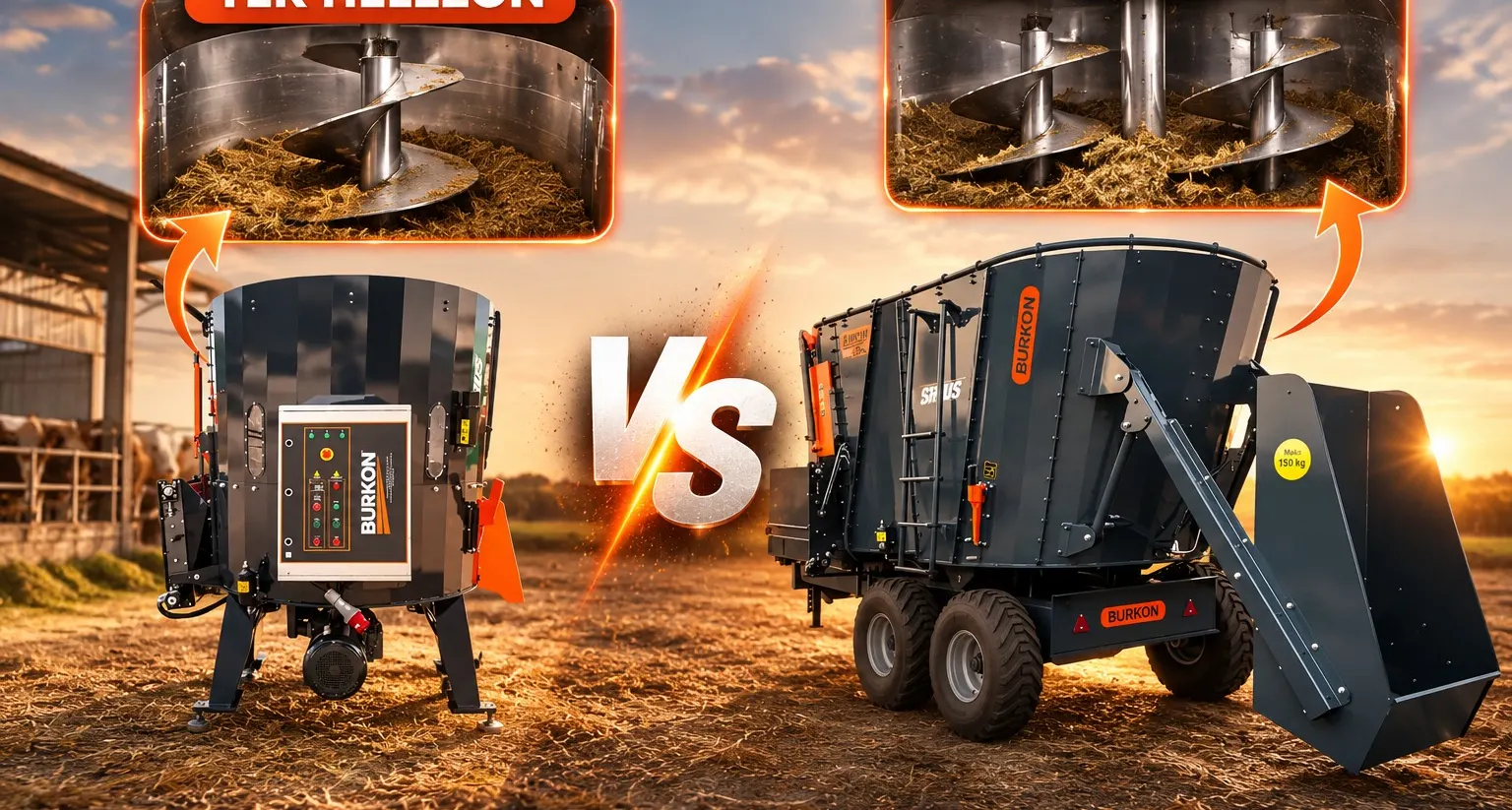
In a single-auger tank, one vertical auger at the center of a cone-shaped tank lifts and cuts the mix as it moves upward. This is sufficient for standard roughage and concentrate mixes.
What the Second Auger Adds
A double-auger tank moves the mix from two directions at once, producing a more homogeneous ration in less time — especially noticeable in rations with a high proportion of dry roughage.
Professional operations running complex rations at 1.8 m³ and above generally choose the double-auger option.
Which Should You Choose?
For small-to-mid operations, single-auger models are sufficient on both cost and maintenance. Larger operations mixing high-roughage rations benefit from the speed and homogeneity of a double auger.